
The freelance world is experiencing its most significant transformation since the gig economy went mainstream. Artificial intelligence isn't coming for freelancers—it's already here, and the data tells a complicated story.
Some freelancers are watching their income evaporate. Others are earning more than ever. The difference isn't luck. It's adaptation.
Let's look at what's actually happening, what the research shows, and how freelancers can position themselves not just to survive this shift, but to thrive within it.
The Disruption Is Real—and It's Measurable
The numbers are sobering. Research published in Management Science found a 21% decrease in job posts for automation-prone jobs related to writing and coding compared with manual-intensive jobs within eight months after the introduction of ChatGPT. Image creation took a similar hit: the introduction of image-generating AI led to a 17% decrease in job posts for graphic design and 3D modeling.
📉 Key Statistic
User engagement on major freelancing platforms specifically dropped, with average time spent on Upwork for Freelancers dropping 20% year-over-year.
Perhaps most surprising is who's being hit hardest. According to a study in Organization Science, top-performing freelancers are seeing the largest setbacks—for every 1% increase in past earnings, they experience an additional 1.7% decrease in monthly income. The assumption that AI primarily threatens lower-skilled workers? The data suggests otherwise. While Brookings research confirms that generative AI exposure can lead to earnings dips, the nuances are critical.
The Categories Most Affected
Not all freelance work is equally vulnerable. The research paints a clear picture of where the disruption is concentrated.
Writing & Content
Demand for substitutable skills like writing and translation decreased by 20–50%. Low-end SEO content is heavily automated.
Design & Visual
Graphic designers face AI tools that generate logos and assets in seconds. The "human premium" is under scrutiny.
Basic Coding
Software development saw a ~20% decrease in job posts. Boilerplate scripting and routine debugging are increasingly AI-handled.
Translation
Standard translation is rapidly declining. Remaining work requires high-stakes accuracy or heavy cultural adaptation.
But Here's What the Doom-and-Gloom Headlines Miss
The disruption story is real, but it's incomplete. Alongside the contraction in certain categories, something else is happening: expansion.
Research reveals that labor demand actually increased after the launch of ChatGPT—but only in skill clusters complementary to AI. Demand for machine learning programming grew by 24%, and AI-powered chatbot development nearly tripled.
Upwork reported that AI-related work grew 53% year-over-year in Q3 2025. The complexity of remaining work is also increasing. While the quantity of simple gigs fell, the average pay of remaining, more complex gigs increased.
The Rise of the AI-Augmented Freelancer
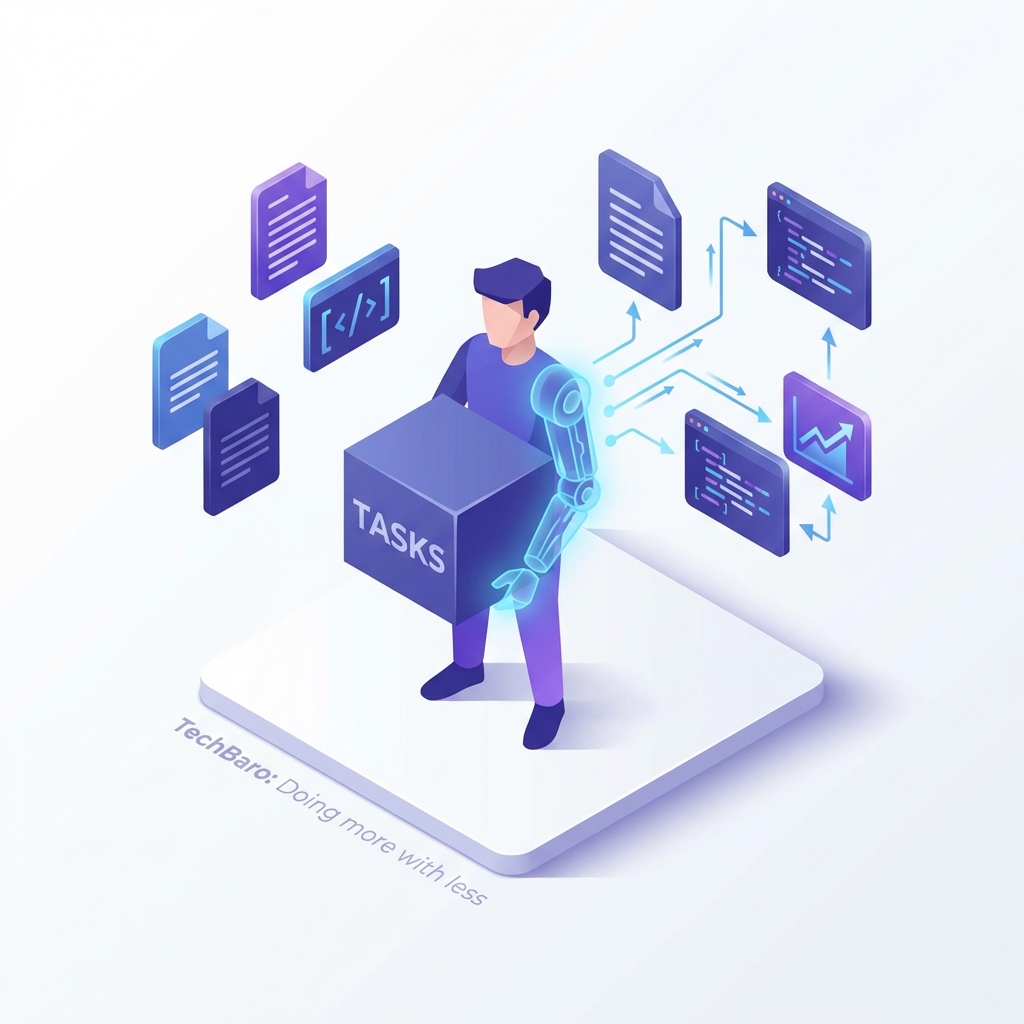
A new model is emerging: freelancers who don't compete with AI, but collaborate with it.
Freelancers using AI writing tools report a 40% reduction in content creation time. This creates a strategy opportunity—but also a pricing puzzle.
🚀 The Pricing Trap
If you bill by the hour, AI productivity gains can reduce the time attached to an invoice. Outcome or fixed-scope pricing can let efficiency benefit both freelancer and client when the scope and acceptance criteria are clear.
New Categories of Freelance Work
AI hasn't just disrupted existing categories—it's created entirely new ones.
- AI Implementation & Integration: Businesses need help connecting AI tools to their workflows. Specialists command $50-200+/hr.
- Prompt Engineering: Crafting effective instructions for AI models is now a specialized, high-value skill.
- AI Training & Enablement: 71% of Gen Z freelancers have learned AI skills and are now teaching companies how to use them.
- Human-AI Quality Control: AI agents struggle with nuance. Expert human review (taking ~20 mins) boosts performance substantially, creating a new oversight role.
Practical Strategies for the AI Era
1. Reposition Around Outcomes
Stop selling "5 hours of writing." Sell "a finished white paper." Value-based pricing captures the efficiency gains AI provides.
2. Move Up the Complexity Ladder
Focus on projects requiring judgment, strategy, and domain expertise. Generative AI struggles with complex, multi-step strategic thinking.
3. Learn to Orchestrate AI
Don't just use AI; learn where it is reliable, how to test its output, and when not to use it. Be the director, not the operator.
4. Specialize Where AI Can't
Industry-specific knowledge allows for 50% higher ROI on AI projects. Deep domain expertise is the moat against commoditization.
5. Build the Human Elements
Client relationships, empathy, and creative vision become more valuable as execution becomes automated.
A Delivery System Clients Can Trust
The durable advantage is not access to an AI tool. Clients can buy that access themselves. The advantage is a delivery system that turns an uncertain brief into a verified result. That means deciding where automation is safe, where human review is mandatory, and what evidence proves the work is ready.
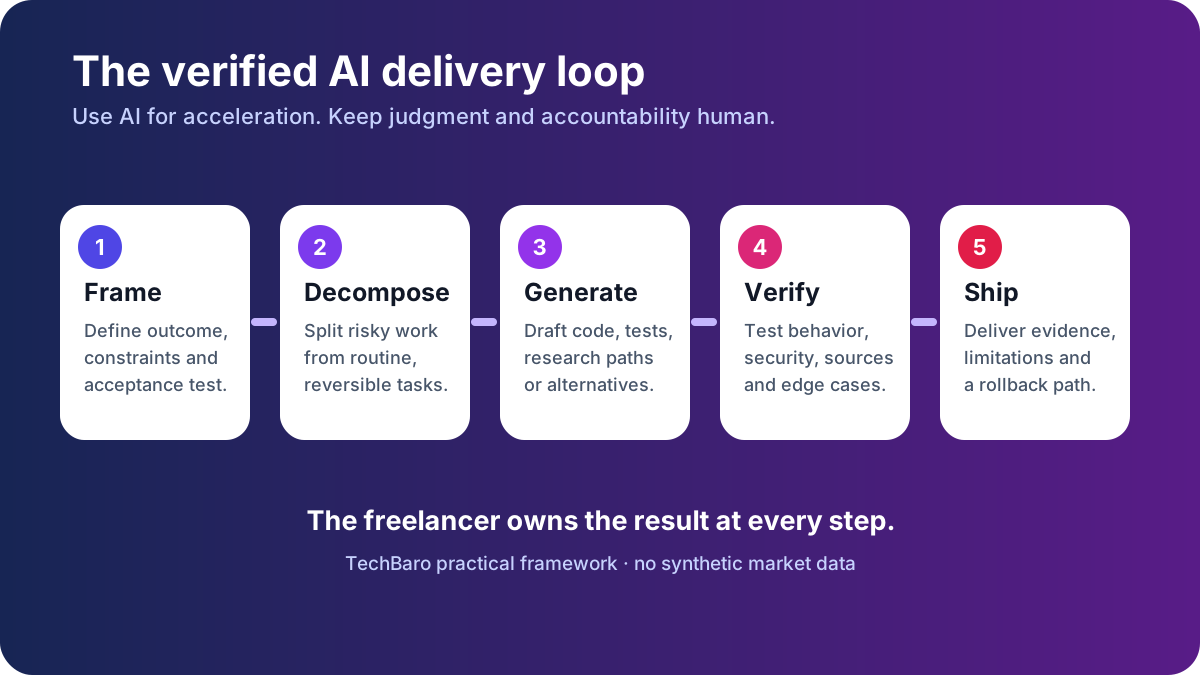
Start by writing the acceptance test before prompting anything. For a feature, describe the behavior, failure cases, accessibility requirements and data boundaries. For research or content, list the questions that must be answered, the acceptable source types and the claims that require verification. This prevents a fluent draft from quietly redefining the assignment.
Then separate reversible work from consequential work. Boilerplate, alternative approaches and first-pass tests are good acceleration candidates. Authentication, financial logic, destructive migrations, legal claims and production configuration deserve slower review. The higher the cost of a wrong answer, the less authority the model should have.
The evidence package
Ship the result with a compact record of how it was checked:
- the acceptance criteria and which tests passed;
- sources for factual claims and the date they were checked;
- known limitations, assumptions and edge cases;
- the rollback or recovery path if the change fails;
- the decisions that still require the client’s judgment.
This is what supports outcome-based pricing: the client is paying for reduced uncertainty and accountable delivery, not for the number of prompts used.
The Bottom Line
AI isn't ending freelancing. It's ending one version of freelancing—the version built on routine tasks that machines can now handle.
The question isn't whether AI will change freelancing. It already has. The question is whether you'll be among those who figure out how to make the new model work—or among those still waiting for the old model to come back.
It won't.
To turn outcome-based positioning into a concrete offer, use the freelance developer proposal template and choose an appropriate commercial structure with the guide to hourly versus fixed-price development.
How are you adapting to the AI shift?
Are you using AI tools in your workflow? Charging differently? We want to know.
Share your strategy with the community →